

Regenerative Agriculture



Cultivating Resilience Through Regenerative Agriculture
At Fyffes, we are working to strengthen the future of tropical fruit production by adopting regenerative agriculture practices that improve soil health, enhance biodiversity, optimise water use and build climate resilience. Through our science-based framework and clear long-term targets, we are helping create more productive, resilient and sustainable banana and pineapple farming systems for generations to come.
What is regenerative agriculture?
Regenerative agriculture is an approach to farming that aims to restore and strengthen the natural capacity of agricultural ecosystems which sustains food production in the long term. It focuses on revitalising soils, enhancing biodiversity, optimising water cycles and reducing waste, minimising external inputs and supports improved soil carbon storage, in turn reducing GHG emissions.
At Fyffes, we see regenerative agriculture as a journey of continuous improvement. Rather than focusing on a single farming practice, it brings together a range of actions that help strengthen the natural systems that food production depends on. These include protecting and improving soils, encouraging biodiversity, optimising water use, reducing agrochemical dependency and supporting climate resilience.
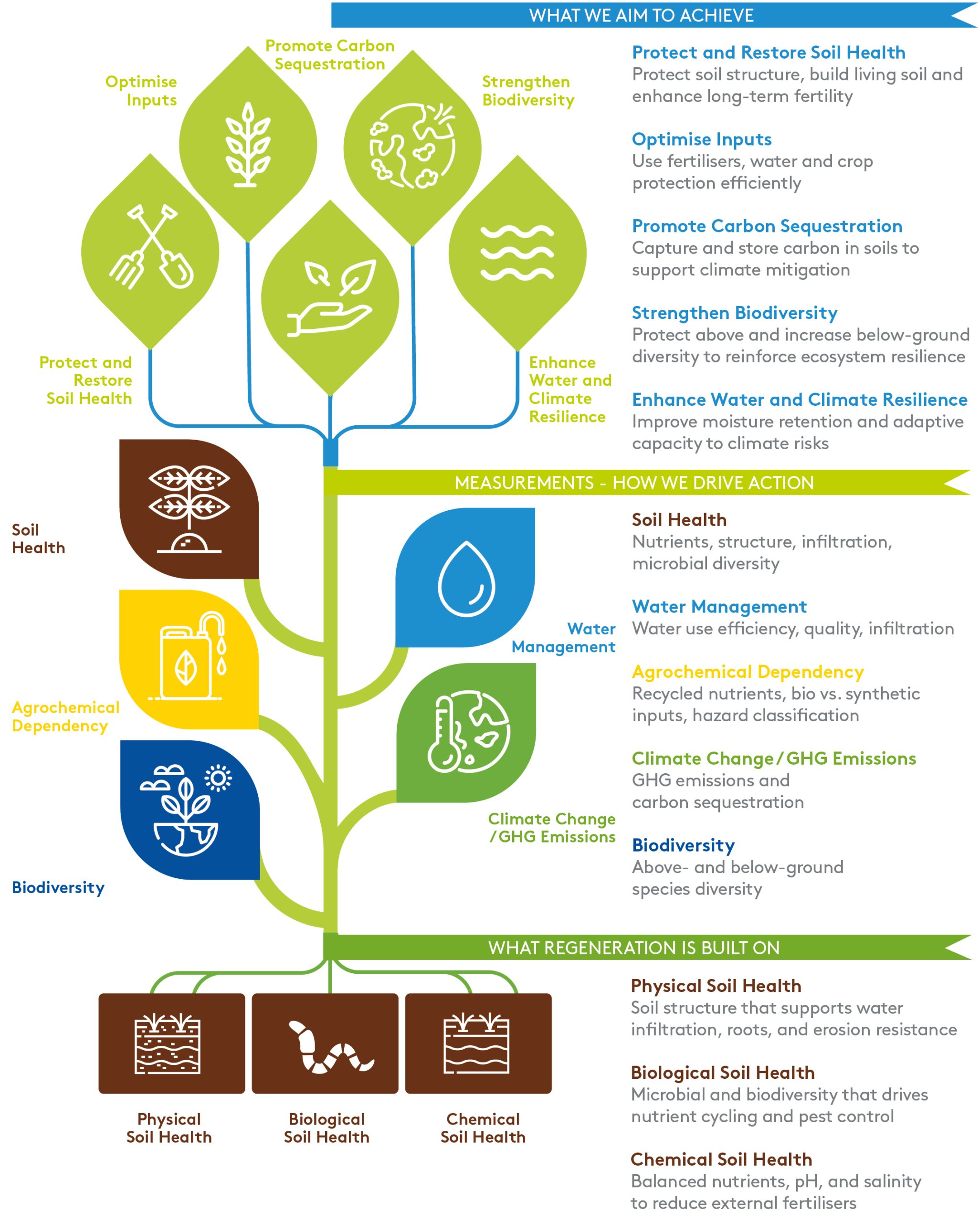
Our regenerative agriculture framework is built around eight key principles, including maintaining soil cover, minimising soil disturbance, improving nutrient efficiency, fostering plant diversity, optimising synthetic fertiliser use and decreasing pesticide use, building soil carbon and improving water infiltration. Together, these actions help create more productive and resilient farms while supporting the long-term sustainability of tropical fruit production.
Read our Regenerative Agriculture Framework here
What is Fyffes’ approach to regenerative agriculture?
Fyffes has developed a regenerative agriculture framework specifically for banana and pineapple production. Created in collaboration with growers and agricultural experts, the framework provides a practical roadmap for implementing regenerative practices across our farms and supply chain.
Our approach is farmer-centred, science-based and focused on measurable outcomes. We recognise that regenerative agriculture looks different across crops and geographies, so we focus on practical solutions that protect fruit quality and productivity while delivering environmental benefits.
The framework is underpinned by a Measurement, Reporting and Verification (MRV) system that tracks progress across five key impact areas:
- Soil health
- Biodiversity
- Water management
- Agrochemical dependency
- Climate change and greenhouse gas emissions
This data-driven approach helps us establish credible baselines, measure progress and verify results over time.
Regenerative agriculture is already being implemented across our owned operations through initiatives such as soil health management, cover crops, improved and more efficient nutrient use, water efficiency improvements, biodiversity conservation, organic matter recycling and climate resilience measures. We use our owned farms to test and validate practices before extending successful approaches across our wider grower network.
What are Fyffes’ regenerative agriculture targets?
Fyffes has established a long-term roadmap to expand regenerative agriculture throughout its banana and pineapple operations and supply chain.
By 2030
We aim to achieve full implementation of our Regenerative Agriculture Framework across all Fyffes-owned banana and pineapple farms. This means that every owned farm will be operating under the framework, with practices that support soil health, biodiversity, water stewardship, climate resilience and reduced environmental impact.
By 2035
We aim to drive the adoption of regenerative agriculture practices across our banana and pineapple supply chain, with the goal of having 40% of our total production volume managed under regenerative agriculture principles by 2035. To achieve this, we will build on the experience and proven approaches developed on our own farms, expanding their implementation throughout our grower network and wider supply chain. Our target is the adoption of regenerative agriculture practices across 13,000 hectares of banana and pineapple production by 2035.
Our broader commitment
As part of this journey, we are expanding regenerative agriculture practices across 13,000 hectares of banana and pineapple production, including grower farms, to strengthen soil health, biodiversity and long-term supply resilience. Progress will be guided by continuous measurement, transparent reporting and collaboration with growers, customers and technical partners.
Read our full Regenerative Agriculture Framework